
 PW Exclusive, in your pocket. News, predictions & the forum — now as an app.


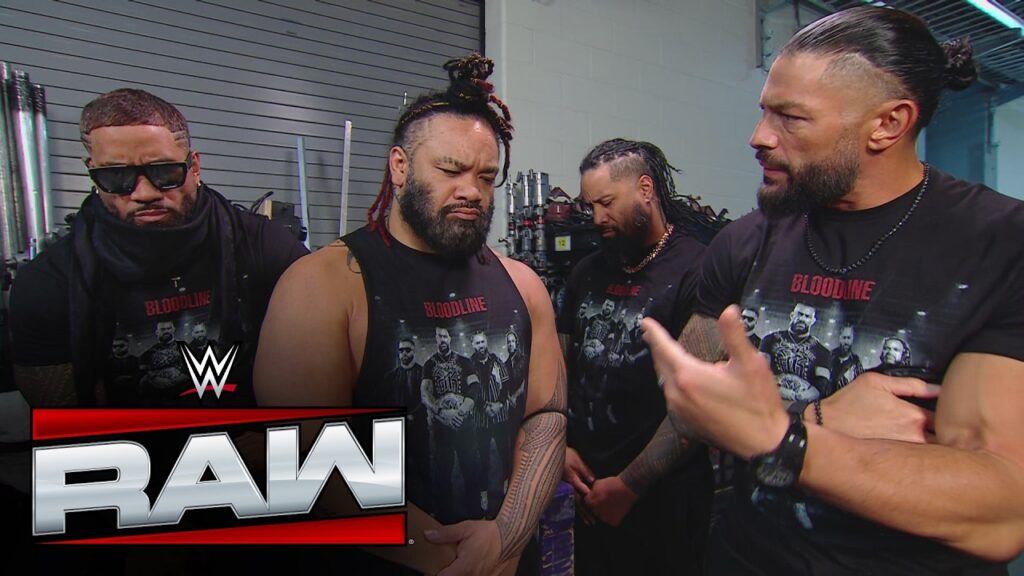
An ESPN pundit says the Tribal Chief’s rare appearances are a feature, not a flaw — and the numbers back him up more than the internet wants to admit.
Every time Roman Reigns disappears for a couple of months, the same tired discourse floods every timeline: Where’s the top guy? Why isn’t the biggest star in the company on TV every week? It’s become a reflex. And it’s wrong.
ESPN’s Joe Fortenbaugh recently made the case that Reigns’ limited schedule is a strength rather than a weakness — that the selective appearances are the entire point, not a compromise. He’s right. And the fact that this even needs arguing tells you how badly modern fans have been conditioned to confuse quantity with importance.
Let’s set the table for anyone who wandered in during the last year or two. Roman Reigns spent the back half of his historic title run — the one that stretched over 1,300 days — working a deliberately reduced schedule. He didn’t wrestle every week. He didn’t even appear every week. When he did show up, it was an event. The Bloodline story was structured specifically around his absences, with Paul Heyman, the Usos, Solo Sikoa and eventually the whole sprawling saga carrying the week-to-week television while Reigns loomed over all of it like a boss you only fight at the end of the level.
Now, post-title, he’s continued to operate on that model. He pops in for the big shows, the marquee angles, the moments that move the needle — and then he vanishes again. Fortenbaugh’s framing is that this isn’t Reigns being lazy or WWE being unable to pin him down. It’s design. It’s the whole strategy.
And here’s the part the “put him on TV every week” crowd keeps missing: scarcity is the product.
To understand why this works, you have to understand what came before it — and what broke.
For decades, WWE’s model was saturation. Your top champion defended the title constantly, appeared on every show, wrestled the house-show loops, and was basically omnipresent. That worked in an era with less content and less access. But by the 2010s, the company had run into a wall of its own making: when your biggest stars are on screen 52 weeks a year, three-plus hours a night, they stop feeling big. Familiarity doesn’t breed contempt so much as indifference. You can’t be special if you’re always around.
The part-time model that Brock Lesnar pioneered flipped that logic. Lesnar’s appearances mattered because they were rare. When he showed up, something happened. The downside was that fans grew to resent the champion who held the belt hostage and only surfaced four times a year. It felt like the title was on vacation.
Reigns’ version threaded the needle. He was around enough — enough to feel like the axis the entire universe spun on, but never so much that the aura wore thin. And crucially, WWE built an entire ecosystem of talent around his absence. That’s the innovation. Lesnar left a vacuum; Reigns left a story.
This is bigger than Roman Reigns, and that’s why I think Fortenbaugh’s point deserves more than a nod.
The reduced-schedule approach is quietly reshaping how WWE thinks about its entire main-event tier. Look at the way the company handles its biggest attractions now:
Compare that to the WCW model of the late ’90s, where every nWo run-in and every main-event overbook eventually turned the biggest stars into wallpaper. Or compare it to the modern streaming-TV problem, where content is so abundant that nothing feels appointment-worthy. Scarcity is the single most valuable currency in entertainment right now, and WWE — for all the criticism it takes — has figured out how to mint it.
There’s also a business reality here that fans underrate. Reigns at a reduced schedule is a healthier, more available Reigns for the premium live events that actually drive revenue. A top star who works 250 dates a year is a top star with a shortened shelf life and a body that breaks down. A top star who works the big shows and stays fresh is one you can keep at the top for years longer. Longevity is the strategy.
Here’s my read — and I want to be clear this is analysis, not any kind of insider claim about unannounced plans.
The part-time-but-central model isn’t going anywhere, and I’d expect WWE to lean into it even harder as the roster’s biggest names age up. The template is now proven: build a deep supporting cast that can carry weekly television, then deploy your top attraction as the gravitational center everything orbits. Reigns showed it could work over years, not just weeks. Cena’s send-off is the next test case. And you can already see younger acts being positioned to eventually inherit that kind of “loom over everything” aura.
The risk — and it’s a real one — is over-application. Scarcity only works when you’ve built something worth waiting for in the gaps. Lesnar sometimes left dead air. Reigns left the Bloodline. The difference between a strength and a self-own is whether the company invests in the storytelling that fills the absence. If WWE gets lazy and just yanks stars off TV without giving fans a compelling reason to keep watching, the whole thing collapses into the old “where’s the champion?” resentment.
But done right? Fortenbaugh nailed it. Reigns’ limited schedule isn’t a bug in the system. It’s the most valuable thing WWE has learned in a decade: that the surest way to keep a star special is to stop treating them like a rerun.
Do you buy that scarcity makes the star — or do you still want your top guy on TV every single week? Sound off in the comments.
Reporting and match coverage produced by the PW Exclusive team. Articles under this byline are drafted with AI assistance and reviewed before publication — see our editorial standards for how we work.
More from PW Exclusive Staff →



Join the discussion. Free MyPWE account — comment, react and get replies.
Create free account Log in