
 PW Exclusive, in your pocket. News, predictions & the forum — now as an app.


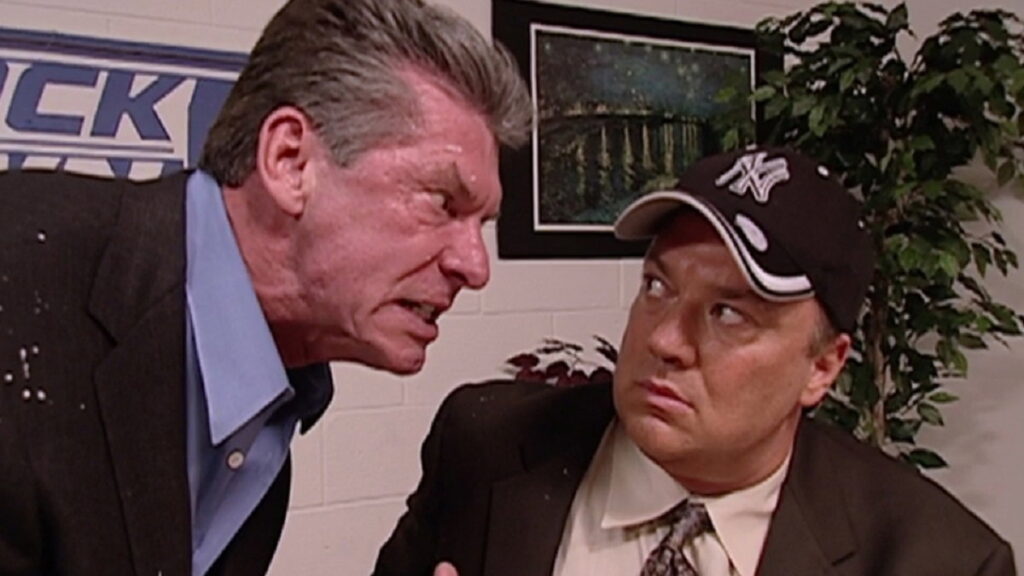
Paul Heyman has opened up about the creative tensions that ultimately ended his first run with WWE, pointing to the 2006 ECW relaunch — and specifically the December to Dismember pay-per-view — as the moment everything fell apart.
Speaking on Insight with Chris Van Vliet, Heyman was blunt about the incompatibility between his vision and Vince McMahon’s when it came to rebuilding ECW as WWE’s third brand. “We had very different visions for the rebirth of ECW,” Heyman said. “I was a lead writer of the third show, Raw, SmackDown, ECW, and he was the chairman of the board with 85% of the voting stock. One of us had to leave.” He added with characteristic self-awareness: “I think the (man) who’s just merely the lead writer of the third show, is going to be the one whose ass is out the door, not the chairman of the board with 85% of the voting stock.”
Heyman’s specific flashpoint was December to Dismember. Coming out of Survivor Series, he was convinced that CM Punk had captured the audience’s imagination and should be positioned as ECW Champion, with Rob Van Dam chasing the title and Bobby Lashley being built as the next breakout star. In his telling, that combination — Punk as champion, Van Dam in pursuit, Lashley being groomed — could have made ECW “red hot” by WrestleMania. McMahon, however, wanted the title on Lashley, and directed that Punk and Van Dam both be beaten inside the Elimination Chamber to get there.
Heyman described what followed as a corrosive backstage dynamic. “I’m affecting everybody else’s career,” he said, “and I’m affecting the audience having a chance to like the product because the product is being sabotaged by the very person who wants something out of the product for it to be profitable, but he can’t get out of his own way in terms of competing with me behind the scenes.” He said the experience became “a god-awful miserable experience” that required one of them to leave — and McMahon wasn’t going anywhere.
Heyman also addressed whether TNA pursued him after he left WWE, noting there was no real interest in 2006. He did acknowledge that by 2010 there were conversations, during which he shared a five-year plan centered on moving away from an aging roster, though he stopped short of saying he was ever truly close to signing.
Rounding out the interview, Heyman credited AEW’s emergence as a genuine positive for the industry, specifically citing improvements it has brought to talent compensation across the board. It’s a revealing look at one of wrestling’s sharpest creative minds — and a reminder of just how differently that ECW revival could have played out.
Reporting and match coverage produced by the PW Exclusive team. Articles under this byline are drafted with AI assistance and reviewed before publication — see our editorial standards for how we work.
More from PW Exclusive Staff →
Join the discussion. Free MyPWE account — comment, react and get replies.
Create free account Log in