
 PW Exclusive, in your pocket. News, predictions & the forum — now as an app.


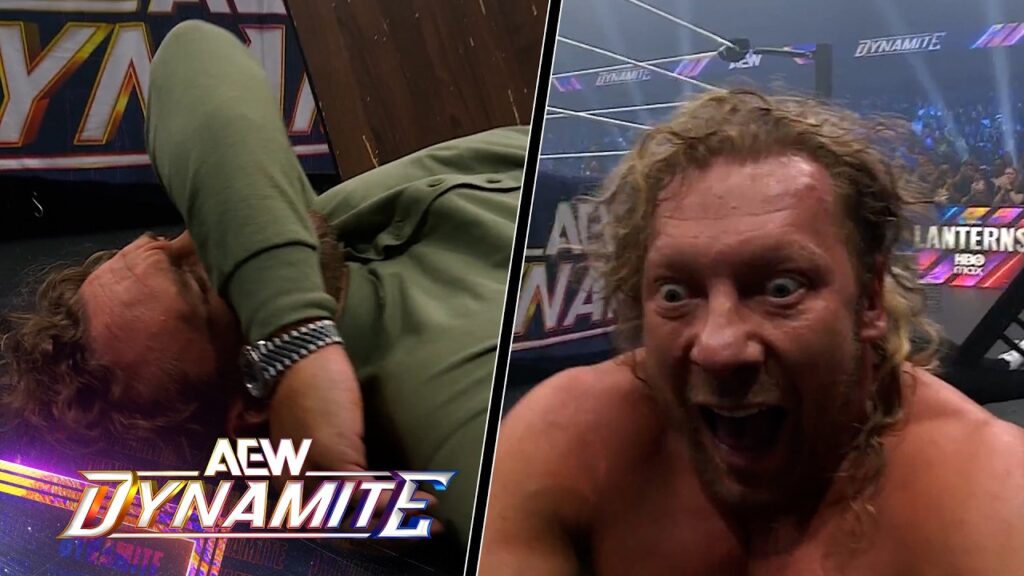
A One-Winged Angel through a table didn’t just end a segment — it turned a dream match into a genuine story about obsession, and that changes everything.
For years, “Kenny Omega vs. Will Ospreay” was the kind of match wrestling fans argued about on car rides home from shows and in group chats at 2 a.m. It was a fantasy booking staple, a phrase you’d type into a search bar just to feel something. And for a long time, that was the problem — it lived as a spectacle, a workrate showcase, a thing you watched to count the moves. What happened on the August 19 edition of Dynamite finally cracked it open into something else. When Kenny Omega put Will Ospreay through a table with a One-Winged Angel to close the show, he didn’t just end a segment. He turned a dream match into a grudge.
That’s a bigger deal than the highlight makes it look. Let me explain why.
The visual is simple enough to describe: Omega snaps, gets Ospreay up, and drives him through a table with his most protected finisher to send the crowd home buzzing. On the surface it’s a stinger, the kind of image AEW loves to build a marquee television main event around. But the way it was staged — Omega “snapping,” the psychological edge, the sense that the guy widely painted as one of wrestling’s great sportsmen abandoned the handshake-and-respect script — is the whole ballgame.
Because here’s the thing about Omega and Ospreay historically: their real-life relationship, and the story their previous encounters told, was rooted in mutual admiration. They’re two men who genuinely revere each other’s work. That’s beautiful for a first meeting. It’s death for a rivalry that has to sustain multiple chapters. You cannot run “we respect each other so much” four times and expect anyone to buy a fifth. What the table spot did was inject the one ingredient every long-term feud needs and this pairing always lacked: resentment.
If you came to AEW recently, here’s the shorthand. Kenny Omega is one of the founding pillars of the company, a former AEW World Champion whose matches in New Japan a decade ago were the reference point an entire generation used to define “the best wrestler alive.” Will Ospreay arrived in AEW as arguably the hottest free-agent signing the promotion had made in years, a flippy phenom who’d already been positioned in Japan and elsewhere as the man carrying that same torch into the next era.
So the shorthand is: they are the same archetype separated by roughly a decade. Omega is what Ospreay could become. Ospreay is what Omega used to be. That generational tension is the richest possible soil for a feud, and until now AEW has largely left it fallow, content to let the two orbit each other and trade the occasional respectful nod. The company has had no shortage of chaos to manage lately — from The Jet trapping Darby Allin and hauling him out on a stretcher the same night to a stacked Continental Challenge Cup bracket — but the Omega–Ospreay dynamic was always the crown jewel sitting slightly out of frame.
Wrestling fans have a bad habit of thinking the best version of a big match is the cleanest one — two babyfaces, mutual respect, may the best man win. It’s the ROH “Code of Honor” instinct. And sure, that produces gorgeous matches. But it produces forgettable stories.
The reason the table spot lands is that it complicates Omega. It suggests the great sportsman is capable of pettiness, of jealousy, of the ugly fear that the younger man is coming for something he’s not ready to give up. That’s a far more interesting Kenny Omega than the smiling ambassador. Consider what’s on the table here thematically:
AEW’s best long-form storytelling has always leaned on real-feeling animosity rather than pure athletic exhibition. The company that gave us blood feuds understands, deep down, that people remember how a rivalry made them feel, not how many near-falls it had. Turning this from an exhibition into a vendetta is the smartest booking instinct they’ve shown with these two.
Let me be clear that this is my read, not a report of anyone’s plans. But the logical path is obvious, and it’s a good one.
The stretcher-adjacent staging of Ospreay’s exit does the work of a written promo: it establishes that Omega has crossed a line and that Ospreay now owes him. When Ospreay returns to television, he doesn’t have to say much — the story is already told. That’s efficient storytelling, the kind that trusts the audience.
From there, the smart build is patience. Don’t rush to the rematch. Let Omega live in the heel space, let him rationalize what he did, let him get under the audience’s skin by being almost reasonable about it. Ospreay, meanwhile, gets to play the wounded ace hunting a receipt. When they finally collide with a title or a stipulation attached, the match doesn’t need to sell itself on athleticism anymore — it’ll sell on the answer to a question the audience actually cares about: does the young man dethrone the legend, or does the legend prove there’s still a reason he’s the standard?
The one way to blow it is to blink — to have Omega apologize, or to frame the attack as a misunderstanding, or to collapse it back into the respectful-handshake dynamic that made this pairing feel inert for years. If AEW keeps the knife in and lets the resentment breathe, this becomes one of the defining rivalries of the era. The table spot was the promise. The follow-through is everything.
Did Omega crossing the line finally make you care about a match you’d already fantasy-booked a hundred times? Drop your take in the comments — I want to hear who you’ve got in the rematch.
Reporting and match coverage produced by the PW Exclusive team. Articles under this byline are drafted with AI assistance and reviewed before publication — see our editorial standards for how we work.
More from PW Exclusive Staff →

Join the discussion. Free MyPWE account — comment, react and get replies.
Create free account Log in