
 PW Exclusive, in your pocket. News, predictions & the forum — now as an app.


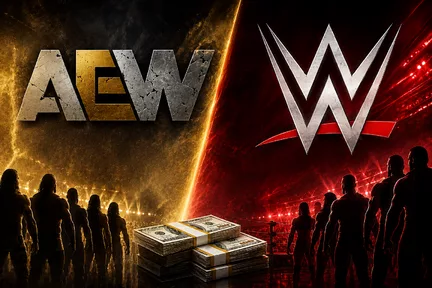
WWE’s ongoing competition with AEW may be driven by more than just ratings or ticket sales — according to Dave Meltzer, the real motivation could be talent salaries.
Breaking down TKO’s recent financial figures on Wrestling Observer Radio, Meltzer argued that AEW’s existence has given WWE talent leverage they wouldn’t otherwise have, and that weakening or eliminating AEW as a competitor would let WWE claw back control over what it pays wrestlers.
“They’re there completely to extract as much profit as they can from it, period,” Meltzer said of TKO’s approach. “And I think that’s one of the reasons they’re fighting AEW so hard, is so that they can get back that control that they thought that they were going to have, and then they don’t have to be escalating salaries anymore and they’d have even bigger profits.”
Meltzer pointed to WWE’s six-hour event scheduled for Edinburg, Texas on August 30 as an example of the company absorbing short-term costs in pursuit of a longer-term goal. He called it a “loss-leader” strategy.
“That’s their loss-leader mentality,” he said. “It’s like, yeah, we’ll take some short-term money losses, but if we can get rid of them, if somehow we get rid of them as far as being major competition to us, maybe we can start asking guys to take pay cuts because they don’t have the leverage of going somewhere else.”
Meltzer’s broader point is that WWE’s main-roster pay bumps in recent years owe as much to AEW’s presence as to WWE’s own revenue growth. “The ones that we see on TV on Raw and SmackDown, the ones on the main roster, they’re all doing great, far, far, far beyond their dreams of what they ever thought they would make in pro wrestling, partially because revenues increased and more so because AEW exists and it’s raised everyone’s salary,” he said.
Even so, he believes WWE talent and UFC fighters remain underpaid relative to the revenue TKO generates. “I never hear from wrestlers complaining about their money. I hear from fighters complaining about their money constantly. But they’re both underpaid and at around the same level. I think, realistically, both should make triple what they make,” Meltzer said, adding that he has run the numbers and believes both companies could triple compensation while still turning a healthy profit.
The theory reframes WWE’s aggressive scheduling and expansion moves — often read simply as attempts to dominate the wrestling market — as also being about long-term cost control. A single-company marketplace would strip talent of the ability to shop their services elsewhere, and history in pro wrestling has shown that competition, more than any other single factor, tends to drive pay upward.
For now, AEW remains very much in business, and as long as Tony Khan is willing and able to spend on top talent, WWE stars will have an alternative to point to at the negotiating table. Whether that dynamic holds — or whether WWE’s financial muscle eventually squeezes AEW out of serious contention — could shape not just the industry’s competitive landscape but the paychecks of everyone working in it.
Reporting and match coverage produced by the PW Exclusive team. Articles under this byline are drafted with AI assistance and reviewed before publication — see our editorial standards for how we work.
More from PW Exclusive Staff →
Every match, rumour and result as the briefcase goes up in New Orleans
Visit the Hub

Join the discussion. Free MyPWE account — comment, react and get replies.
Create free account Log in