
 PW Exclusive, in your pocket. News, predictions & the forum — now as an app.


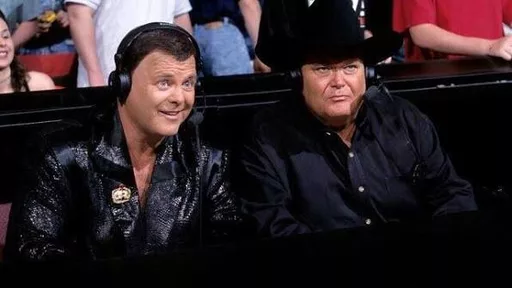
Jim Ross has revisited one of the more colorful dynamics of WWE’s Attitude Era broadcast booth, detailing on his Grilling JR podcast just how often Vince McMahon would bark instructions — and criticism — into his headset during live shows, while noting that his longtime partner Jerry “The King” Lawler was spared that treatment entirely.
Ross explained that whenever McMahon had a working headset connection to the announce desk, he was virtually guaranteed to hear from him, often in frustrated tones. He admitted he never fully understood the root of it, floating theories ranging from insecurity to a need for control. Ross also recalled instances where McMahon would demand he repeat something on air that had already been said, simply because McMahon hadn’t been listening closely enough — a miscommunication Ross said sometimes played out awkwardly on live television, including one specific moment during a commercial break on Raw where he says he was ordered to restate something he’d already covered.
Still, Ross was quick to offer McMahon some grace, pointing out that the WWE boss was managing far more than just commentary during broadcasts — potentially juggling merchandise approvals and countless other business matters in real time. Even so, Ross summed up working under those conditions bluntly, saying McMahon was “challenging to work for every time out.”
What stood out most in Ross’s recollection was the contrast in how McMahon treated Lawler. According to Ross, he never once heard McMahon raise his voice at Lawler through the headset, a discrepancy Ross attributed to McMahon’s understanding that Lawler simply wouldn’t stand for it. Ross, by his own account, wasn’t afforded the same immunity — enduring the brunt of McMahon’s in-ear outbursts multiple times per show.
Ross also touched on the mechanics of his partnership with Lawler away from the announce table, revealing the two didn’t typically attend production meetings together because Lawler had little use for them. Ross credited Lawler’s natural instincts for the business, saying his broadcast partner didn’t need heavy preparation to be effective, and grouped him alongside Bobby Heenan as commentary partners who elevated his own performance.
For longtime fans, this kind of behind-the-curtain glimpse only reinforces just how tightly McMahon controlled every element of WWE programming during its most dominant creative period. Commentary in that era wasn’t simply color analysis — it was live-edited storytelling, shaped in real time by a notoriously hands-on boss whose notes could arrive mid-sentence. Ross has told versions of these stories before, but the specific detail about Lawler’s exemption adds a new wrinkle to understanding the internal pecking order of that broadcast team, and why Ross and Lawler’s chemistry — despite, or perhaps partly because of, that uneven pressure — became one of the most enduring pairings in wrestling history.
Whether it’s pure respect, personality, or Lawler’s own refusal to be micromanaged, the anecdote is a small but telling window into how McMahon operated behind the scenes, and why some voices in that WWE machine got treated differently than others.
Reporting and match coverage produced by the PW Exclusive team. Articles under this byline are drafted with AI assistance and reviewed before publication — see our editorial standards for how we work.
More from PW Exclusive Staff →
Ospreay vs Moxley headlines as AEW returns to Chicago
Visit the Hub

Join the discussion. Free MyPWE account — comment, react and get replies.
Create free account Log in