
 PW Exclusive, in your pocket. News, predictions & the forum — now as an app.


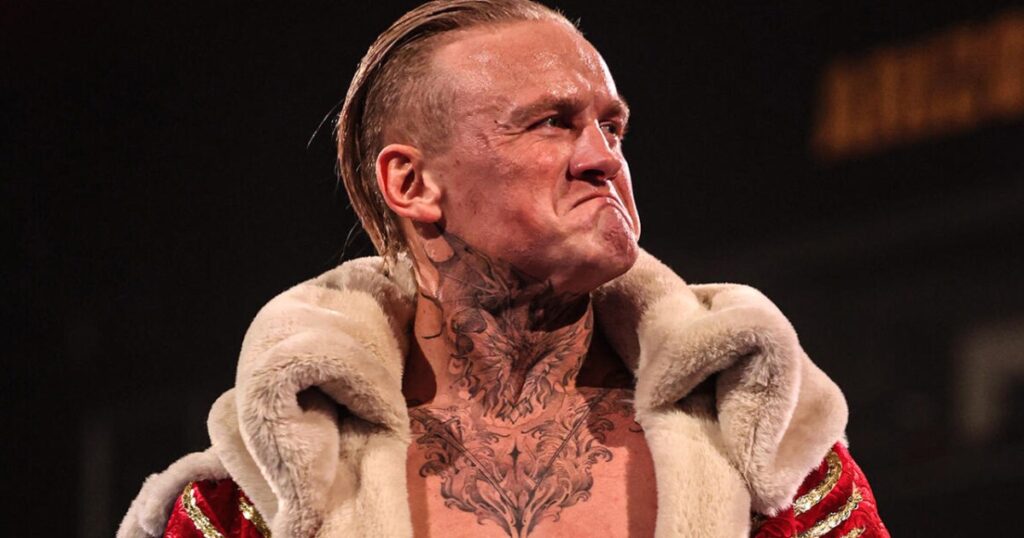
The Mad Dragon called a run in Japan a career goal just as he’s landing in AEW — and it reframes the entire conversation about what he’s there to do.
Ilja Dragunov is barely through the front door in AEW and he’s already looking out the window. In recent comments, the former WWE star named wrestling in Japan as a goal he still needs to accomplish — a line that, on the surface, sounds like standard wrestler wanderlust. Dig a little, though, and it tells you something important about the kind of talent AEW just added, and the kind of booking that actually gets the most out of him.
This isn’t a guy angling for a merch table and a part-time schedule. This is a worker who defines himself by the fights he hasn’t had yet. And in 2025, that mindset is either a gift or a problem depending entirely on how he’s used.
For newer fans who maybe only caught him in his WWE NXT run, here’s the shorthand: Dragunov is one of the most intense, emotionally violent performers of his generation. He built his reputation in Germany and across the European independents before becoming a cornerstone of WWE’s UK-based NXT brand, where his series of matches against Walter (now known as Gunther) became legendary — brutal, chop-soaked wars that felt like genuine fights.
The “Mad Dragon” gimmick isn’t a nickname so much as a warning label. His appeal has never been promos or politics; it’s the way he throws himself into a match like the result is a matter of personal survival. That’s exactly the kind of performer who thrives in a style-first environment — which is precisely what Japan represents, and arguably what AEW’s best matches have always been built on.
So when he says Japan is a bucket-list item, he’s really telling you what he values: hard-hitting, respect-driven, big-fight wrestling. The destination is almost beside the point. The philosophy is the tell.
Dragunov has already hit the ground running. After a surprise appearance at WrestleDream, he made his in-ring Dynamite debut against Speedball Mike Bailey, which is about as close to an ideal first outing as you could script. Bailey is a workrate machine, exactly the sort of opponent who lets Dragunov show what he does without needing a word of explanation. Smart matchmaking. No notes.
Here’s the catch, and it’s the thing hanging over this entire signing: AEW’s roster is deep to the point of congestion. We’ve already dug into AEW’s signing spree and whether all that depth is an asset or a logjam, and Dragunov is the perfect test case. A performer this good can get genuinely lost on a show that has too many good performers and not enough televised real estate to feature them all.
That’s what makes the Japan comment so revealing. Dragunov is signaling — intentionally or not — that he’s a wrestler who needs purpose. He needs opponents, feuds, and a style of match that gives his intensity somewhere to go. Drop him into a crowded midcard rotation where he wrestles a different hot opponent every three weeks with no connective tissue, and you waste the single most valuable thing he brings: the sense that every match matters.
Some fans hear a new signing talk about other territories and get nervous, like he’s already planning his exit. I’d read it the opposite way. AEW, more than any other major North American company, has infrastructure for exactly this. Tony Khan’s promotion has long-standing working relationships with Japanese wrestling, a track record of cross-promotional appearances, and a locker room that already speaks the language of that style.
In other words: Dragunov saying he wants Japan inside an AEW contract isn’t a conflict. It’s a roadmap. The smartest version of his booking leans into that stated goal rather than around it. Picture a storyline that sends him on a “warrior’s journey,” where the in-ring philosophy he’s chasing becomes the actual character hook. That’s a far more interesting identity than “another really good guy who has really good matches on Dynamite.”
The alternative — ignoring it, using him as a reliable TV win-or-lose body — is the easy path, and it’s the one that’s quietly buried plenty of talented AEW signings before. The difference between Dragunov being a franchise-level addition and a forgettable one isn’t his ability. His ability is settled. It’s whether the booking gives his obsession somewhere to point.
Let me be clear this is my read and not a report of anybody’s plans: the logical trajectory is for AEW to build Dragunov toward one defined, high-stakes rivalry rather than scattering him across the card. His first assignments — WrestleDream, then Bailey — suggest a company that understands his value is in “big match” framing. The challenge is sustaining that past the novelty window.
The best-case scenario is that AEW treats the Japan ambition as fuel, positioning him as a wrestler constantly seeking the hardest fight available, and letting those fights feel like events. The worst case is the one that’s swallowed so many good hands in an overstuffed roster: a strong debut, a couple of excellent TV matches, and then a slow fade into the background because there simply wasn’t a lane carved out for him.
Dragunov did his part by telling everyone exactly what makes him tick. Now it’s on the people drawing the maps. A wrestler who defines himself by the mountains he hasn’t climbed is the easiest guy in the world to book — as long as you’re willing to actually give him a mountain.
Do you think AEW builds Dragunov into a centerpiece, or does he get lost in the shuffle like so many before him? Drop your take in the comments.
Reporting and match coverage produced by the PW Exclusive team. Articles under this byline are drafted with AI assistance and reviewed before publication — see our editorial standards for how we work.
More from PW Exclusive Staff →



Join the discussion. Free MyPWE account — comment, react and get replies.
Create free account Log in