
 PW Exclusive, in your pocket. News, predictions & the forum — now as an app.


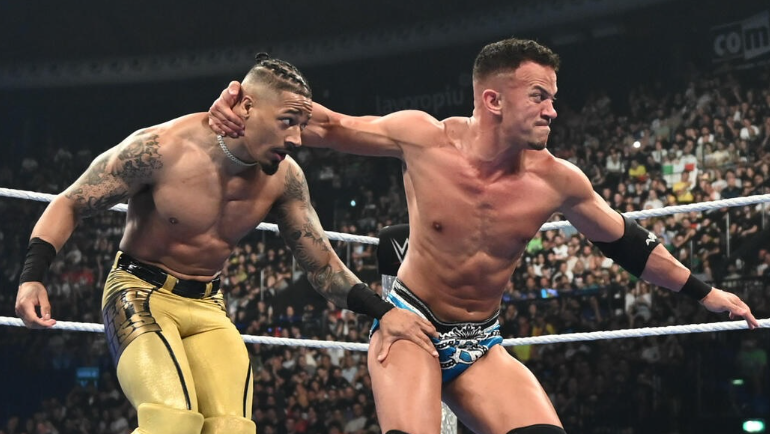
Ricky Saints doesn’t see himself as a straightforward bad guy, even though he’s spent much of his WWE tenure working as a heel. Speaking about how he approaches his current character, Saints explained that he doesn’t view it in traditional villain terms, and that he believes fans have their own reasons for how they react to him in the ring.
Saints, known to longtime fans as Pete Dunne during his run in NXT UK and NXT proper, was rebranded upon his move to the WWE main roster. Since then, he’s largely been positioned on the heel side of the ledger on Raw and SmackDown, often working as a steady hand in the midcard rather than a top-of-the-card antagonist. That distinction seems to matter to him — there’s a difference between playing a character fans are supposed to boo and playing one that simply doesn’t ask for their approval.
It’s a subtle but familiar distinction in pro wrestling. Some heels are built purely to be despised — cheating, taunting, and manipulating their way to get a rise out of the crowd. Others, like Saints seems to be describing, operate more in gray territory: characters who aren’t necessarily malicious, but who also aren’t looking to be liked. That kind of nuance often plays better with modern audiences, who are quick to cheer performers they respect even when the storyline calls for boos.
Given his background, it tracks that Saints would think about his presentation this way. As Pete Dunne, he built a reputation as one of the most technically gifted and stiff workers to come through the UK scene, earning respect from hardcore fans regardless of alignment. That kind of in-ring credibility can complicate a straightforward heel run — audiences who admire the work don’t always want to hate the worker doing it, even if the character is written to be unlikable.
WWE has leaned into that kind of ambiguity with several performers in recent years, letting crowd reactions dictate adjustments rather than forcing a strict good-guy, bad-guy dynamic. If Saints continues to view his character as something other than a pure villain, it opens the door for WWE creative to lean into that nuance rather than fight it, especially if fans keep responding to him in ways that don’t match a typical heel run.
For now, Saints remains a fixture in the midcard trenches, working with the kind of technical precision that made his name in the first place. Whether WWE eventually shifts his alignment or leans further into his current run, his comments suggest he’s thinking about the character in more layered terms than a simple heel-versus-face framework. That kind of self-awareness from a performer is often the first sign of a character evolution still to come.
Reporting and match coverage produced by the PW Exclusive team. Articles under this byline are drafted with AI assistance and reviewed before publication — see our editorial standards for how we work.
More from PW Exclusive Staff →
Get all the latest ahead of AEW's return to Wembley Stadium
Visit the Hub

Join the discussion. Free MyPWE account — comment, react and get replies.
Create free account Log in