
 PW Exclusive, in your pocket. News, predictions & the forum — now as an app.


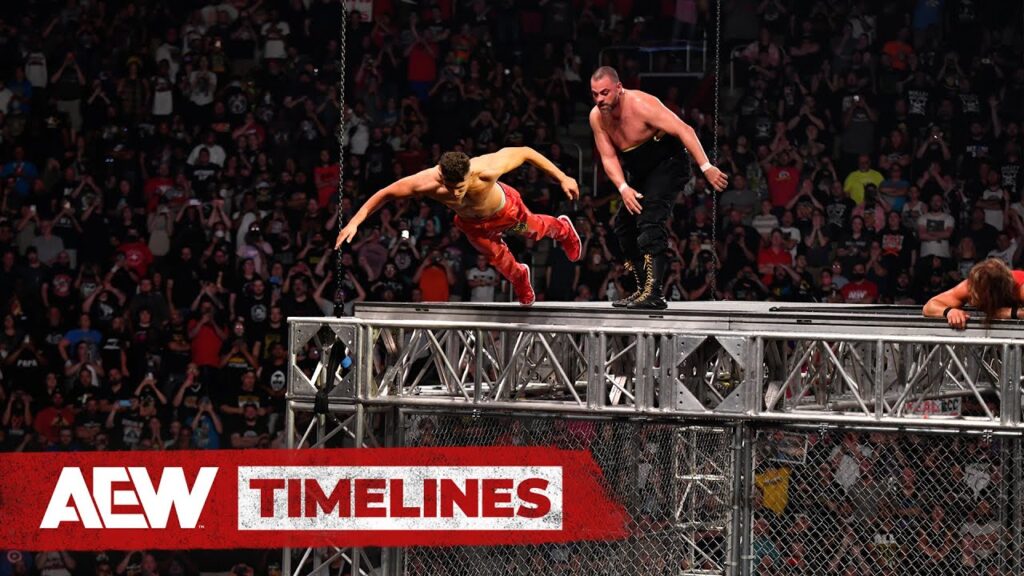
AEW referee Aubrey Edwards has identified Blood and Guts as the toughest match on the promotion’s calendar to prepare for from an officiating standpoint. Edwards, one of the most recognizable and respected referees in the industry, singled out the annual steel cage and scaffold spectacle as uniquely demanding compared to the litany of hardcore, weapons-based, and otherwise chaotic matches AEW has produced since its launch.
Blood and Guts has become one of AEW’s signature gimmick matches, typically pitting two multi-man teams against each other across a two-tiered structure enclosed in steel, with the roof serving as an additional battleground. The match draws heavily from WCW’s old War Games concept, and its scale, combined with the number of competitors involved and the elevated risk of the top structure, separates it from AEW’s other hardcore stipulations in terms of what a referee has to track and manage in real time.
That distinction matters. Most AEW referees are trained to handle chaotic multi-man situations, count falls amid interference, and manage weapons spots, but Blood and Guts compresses all of those variables into one match while adding verticality and a steel structure that limits sightlines and mobility. A referee inside that cage has to simultaneously watch for pinfalls or submissions, monitor wrestler safety on a scaffold with a hard floor below, and keep the match moving in a way that protects performers without breaking the intensity fans expect from the stipulation.
Edwards’s comments offer a rare glimpse into the officiating side of AEW’s biggest hardcore matches, a perspective that rarely gets attention compared to the wrestlers themselves. Referees are often an afterthought in discussions of dangerous match types, but the logistics of officiating something like Blood and Guts, positioning, communication with agents and producers, and split-second calls in a structure that limits escape routes, are as demanding as anything asked of the talent competing in it.
AEW has leaned on Blood and Guts as an annual showcase since introducing it in 2021, using it to blow off long-simmering faction feuds with a match stipulation built for spectacle. Given how central the match has become to AEW’s identity, insight from someone who has to referee it carries real weight for understanding just how much planning goes into pulling it off safely. As AEW continues to build out its hardcore match catalog, Edwards’s remarks are a reminder that the difficulty of these matches doesn’t start and end with the wrestlers themselves.
Reporting and match coverage produced by the PW Exclusive team. Articles under this byline are drafted with AI assistance and reviewed before publication — see our editorial standards for how we work.
More from PW Exclusive Staff →
Get all the latest ahead of the biggest party of the summer
Visit the Hub



Join the discussion. Free MyPWE account — comment, react and get replies.
Create free account Log in